Track vs Trackless Retractable Gates: Which One Should You Choose?
When planning an entrance gate for a factory, school, residential community, or commercial property, customers often ask a simple question.
Should the project use a track retractable gate, or would a trackless retractable gate be the better option?
Both solutions are used in many entrance systems today. The structure, however, is not the same. A track gate runs on a ground rail, while a trackless retractable gate relies on magnetic guidance and dual motors to keep the movement straight.
In actual projects, several practical factors usually affect the decision. The ground condition is one of them. Wind exposure around the entrance also matters. In addition, the length of the gate and the frequency of vehicle traffic often influence the final choice.
Checking these conditions before installation can prevent many problems later. It also helps ensure the gate operates smoothly and remains stable during long-term use.
Track Retractable Gates
Track retractable gates operate on a physical ground track, usually made of square steel, angle steel, or I-steel. The gate wheels move directly along this track, which provides a clear and stable movement path.
Square steel rails: Easy to install using expansion bolts; maximum load capacity is 50 tons.
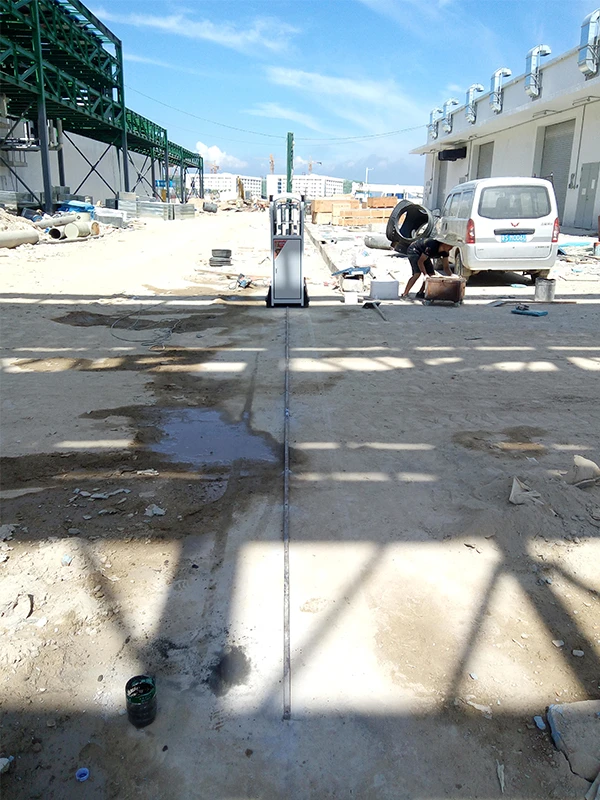
I-beam steel rails: Require pre-embedding in grooves; maximum load capacity is 100 tons.
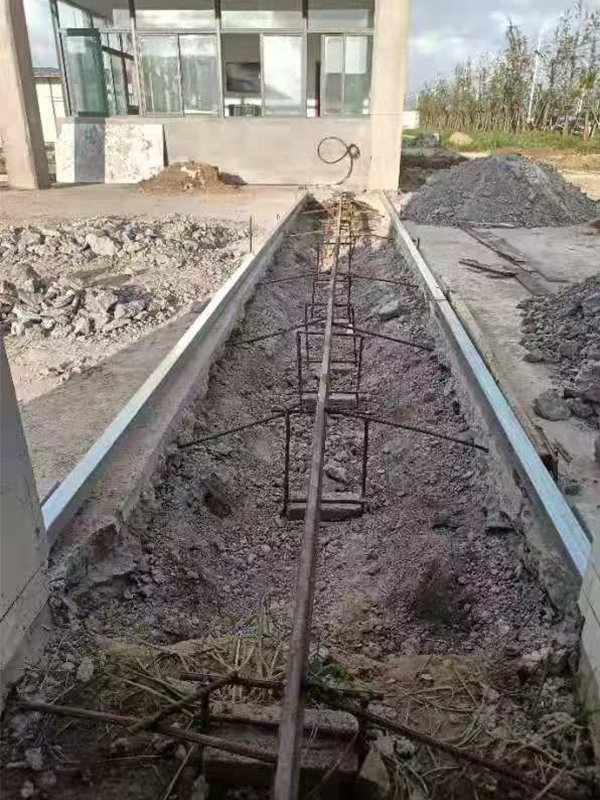
Double rails: Wheels are more durable; better suited for heavy vehicles; gradient not exceeding 5 cm.
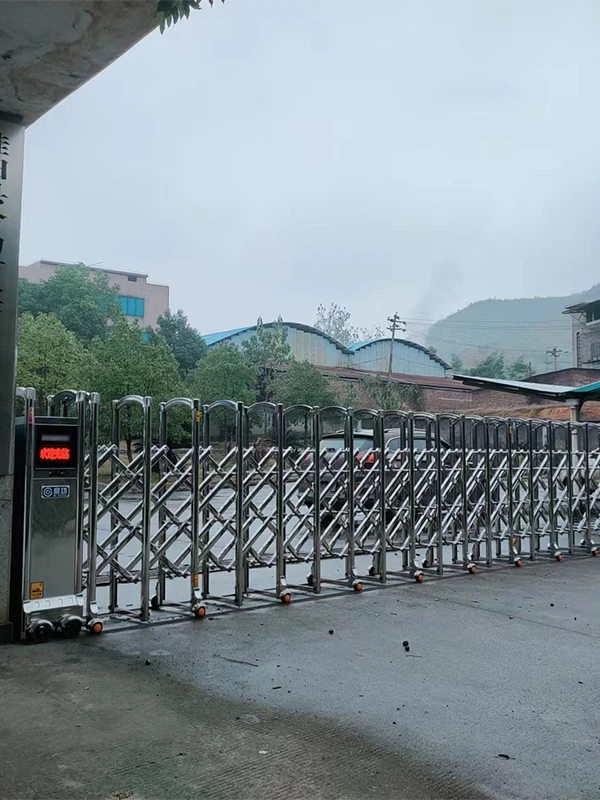
Because of this structure, track gates are generally considered the more traditional solution for large entrance gates.
Advantages of Track Retractable Gates
Strong Stability
Since the gate moves along a fixed track, the running direction is very precise. This makes the system stable even when the gate is relatively long.
Better Wind Resistance
Track systems provide additional ground support, which helps prevent the gate from shifting in strong wind conditions. For locations such as coastal areas or open industrial parks, this feature is particularly important.
Suitable for Uneven Ground
If the ground has slight slopes or uneven areas, the track can help correct the movement path of the gate. This ensures that the gate still opens and closes smoothly.
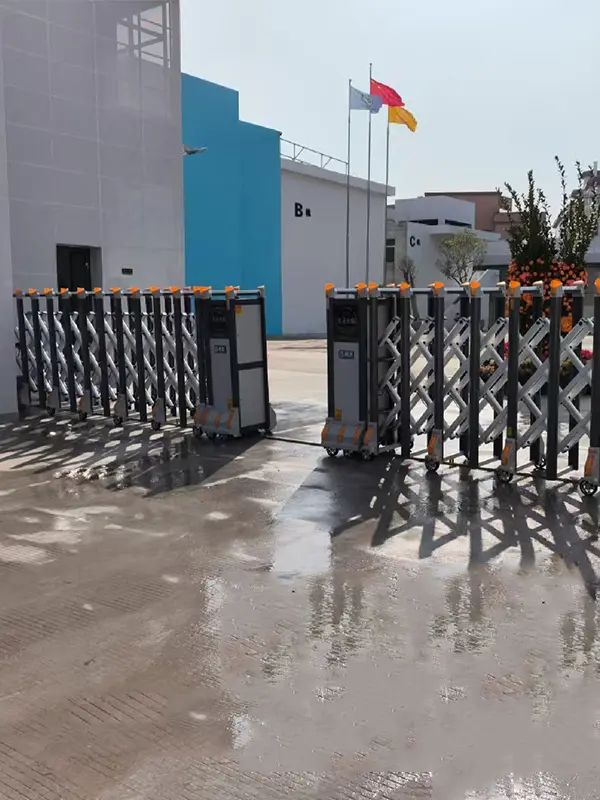
Disadvantages of Track Retractable Gates
Despite their stability, track gates also have several limitations.
More Complex Installation
Installing a track usually requires cutting or grooving the ground to embed the rail. This construction process takes longer and may damage the original pavement.
Higher Maintenance
Over time, debris like sand and dust can build up inside the track. In more humid climates, steel rails are also prone to rust. That buildup—or any wear on the wheels—can make the gate run less smoothly than it should.
Obstruction to Vehicles
Because the tracks are located on the ground, frequent passage of heavy vehicles can cause them to gradually deform under prolonged pressure.
With improvements in modern gate technology, many new projects now prefer trackless retractable gates. In fact, more than 80% of recent installations in some regions use trackless designs.
Trackless Retractable Gates
Trackless retractable gates operate without a ground rail. Instead of a physical track, they rely on a magnetic navigation system combined with dual motors to maintain a straight movement path.
Because there is no track on the ground, this design offers several practical advantages.
Advantages of Trackless Retractable Gates
Faster and Easier Installation
Trackless systems do not require ground excavation. The gate head and gate body are installed directly on the surface, and magnetic guidance points are placed along the center line.This greatly reduces installation time and construction cost.
Cleaner Appearance
No track on the ground means the entrance looks a lot neater and more up-to-date. That’s a big part of why you’ll find trackless gates at places like government buildings, schools, and high-end residential communities.
Better Vehicle Access
Since there is no rail on the ground, vehicles such as forklifts, trucks, cleaning machines, and maintenance vehicles can pass freely without obstacles.
Mature and Reliable Technology
Modern trackless retractable gates use magnetic navigation and intelligent control systems to automatically correct direction during operation. This helps prevent the gate from drifting or deviating.
Lower Maintenance Requirements
Without a track, there is no risk of rust, sand accumulation, or rail deformation. In many cases, routine maintenance is minimal.
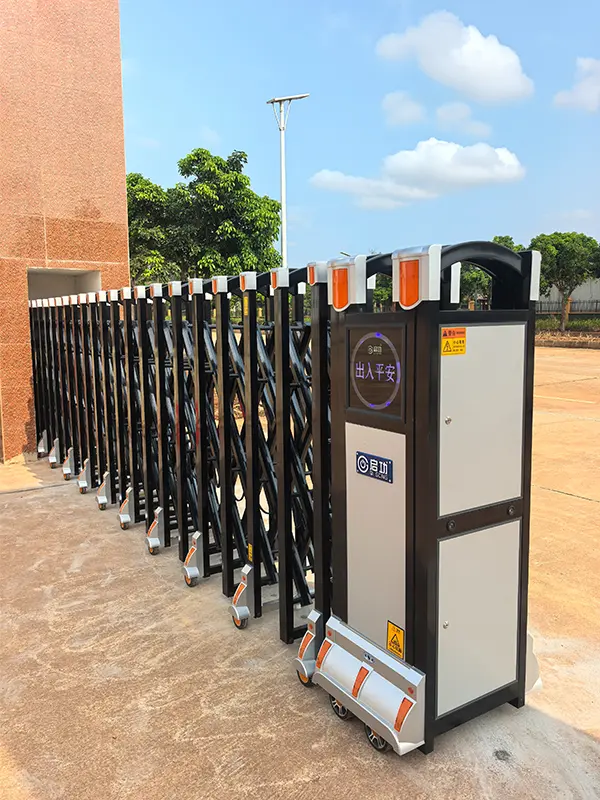
Limitations of Trackless Retractable Gates
Although trackless systems are now the most common solution, they still have some limitations.
Higher Ground Flatness Requirements
The ground needs to be flat enough. If the ground is sloping, it will cause uneven force on both sides of the gate, resulting in a lateral deviation during operation; when the navigator is tilted, it will be inaccurate in sensing the magnetic field signal, easily misjudging the path, causing the gate to “deviate” or automatically retreat midway.
Slightly Lower Wind Resistance
Compared with track systems, trackless gates have less lateral support. In areas with extreme wind conditions, additional reinforcement such as wider chassis designs or wind-resistant hooks may be required.
Key Differences Between Track and Trackless Gates
The following comparison summarizes the most important differences.
| Feature | Track Retractable Gate | Trackless Retractable Gate |
|---|---|---|
| Running System | Physical steel track | Magnetic navigation |
| Installation | Requires ground excavation | Simple installation |
| Vehicle Passage | Track may obstruct vehicles | Smooth ground surface |
| Wind Resistance | Strong | Slightly lower |
| Maintenance | Higher | Lower |
When Should You Choose a Trackless Retractable Gate?
In most projects today, trackless retractable gates are the preferred option. They are especially suitable when:
The ground surface is concrete or asphalt and relatively flat
The entrance needs a modern and clean appearance
Vehicles frequently enter and exit the area
Installation time needs to be short
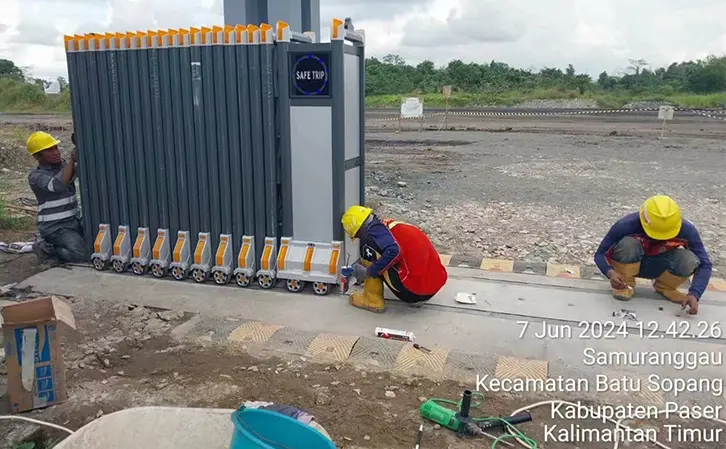
This is why trackless gates are commonly used for factories, schools, residential communities, office parks, and government facilities.
When Is a Track Retractable Gate Still Recommended?
Although trackless systems are popular, track gates are still useful in certain situations.
A track retractable gate may be a better choice when:
The site is located in coastal areas with frequent strong winds
The ground surface has noticeable slopes or uneven areas
An existing track system is already installed and can be reused
Maximum wind resistance is required for large factory entrances
In these environments, the physical track helps maintain stability and prevents the gate from deviating during operation.
Conclusion
At the end of the day, both track and trackless retractable gates come with their own strengths. Which one makes more sense really comes down to your specific setup—things like the entrance environment, ground conditions, and how the gate will actually be used day to day.
For most newer projects, trackless gates tend to be the more practical and cleaner-looking option.
That said, if you’re dealing with strong winds or ground that’s less than level, a traditional track system might still give you better stability.
So before you settle on a gate, it’s worth taking a close look at your site conditions. A little upfront attention can go a long way toward making sure whatever you choose runs safely and reliably for years to come.